Loading... Today

-- 0

-- 0

The Electrical Post
Indian Consumer Durables Sector
Currently, the fastest-growing major consumer durables market in the world, India is expected to become the fourth-largest by FY 2026-27.
The sector contributes 0.6% of India’s GDP. Aided by a steady rise in the demand for consumer durables, the market is projected to grow at 11% CAGR, touching INR 3 lakh crore by FY 2028-29. Higher disposable incomes, rapid technological innovation, and changing lifestyles are driving demand for consumer durables, triggering a notable expansion in India’s manufacturing capacity. Global brands are committing more seriously to the market, while Indian manufacturers are investing in product development and scale.
Favourable government policy and initiatives, aided by GST reforms, have provided strong tailwinds to the sector, which is undergoing a meaningful shift. If this trajectory holds, the country is on track to becoming a significant player in appliances and electronics by 2030 – not just as a consumption market, but as a manufacturing and innovation base.
Towards the end of the financial year, the consumer durables sector was impacted by a sharp escalation in global input cost volatility. Heightened geopolitical tensions during the fourth quarter led to increased prices across select raw materials, energy inputs and logistics, resulting in short term cost pressures for manufacturers. While underlying demand conditions remained stable, the increases contributed to a more challenging cost environment as the year closed.
Emerging Consumer Trends
Premiumisation
FY 2025-26 has been a defining year for premium home appliances in India. Rising disposable incomes, wider financing options, and evolving consumer expectations spanning aesthetics, build quality, brand credibility, and energy efficiency are driving a clear shift towards premiumisation.
Energy Efficiency and Sustainability
Revised BEE norms came into force on January 1, 2026, setting stricter energy benchmarks to reduce electricity consumption and advance India’s sustainability targets. Simultaneously, star ratcheting was made mandatory for a new set of appliances including televisions, LPG gas stoves, cooling towers, and chillers.
Transition towards Energy Efficient BLDC Technology
India’s electric fan market is shifting toward BLDC motor-based fans, driven by rising electricity costs and growing preference for energy efficient appliances. Unlike traditional fans consuming 70-80 watts, BLDC fans operate at just 30-40 watts, delivering meaningful energy savings. Government initiatives are accelerating this transition. The Bureau of Energy Efficiency has made star labelling mandatory for ceiling fans, with TPW fans expected to follow. This is prompting manufacturers to invest in advanced motor technologies, driving faster adoption of premium, energy-efficient products. The India Cooling Action Plan, launched by the Ministry of Environment, Forest and Climate Change, targets a 25-40% reduction in cooling energy demand by 2037–38 further strengthening the long-term case for BLDC fan adoption across the country.
Export opportunities
India’s positioning as an export base for consumer electricals continues to improve, supported by expanding manufacturing scale, quality compliance, and the global shift towards diversified sourcing under the China+1 framework. Demand is being driven by replacement cycles in developed markets and urbanisation led consumption in select emerging economies. At the same time, a dynamic geopolitical environment, evolving trade policies, and heightened focus on supply chain resilience are influencing global procurement decisions. Increasing regulatory requirements related to energy efficiency, safety, sustainability, and product compliance continue to favour manufacturers with strong quality systems, certification capabilities, and regulatory readiness, supporting a constructive medium-term outlook for exports from India’s consumer durables sector, notwithstanding periodic volatility in global demand conditions.
Smart Home Integration and IoT-Enabled Features
India’s smart and connected appliances market, valued at approximately USD 3.2 billion in 2025, is projected to grow to USD 6.2 billion by 2034, reflecting a CAGR of ~7.3%, driven by rising internet and smartphone penetration, rapid expansion of ecommerce, and sustained government investment in energy efficiency and digital infrastructure. Within this broader landscape, smart ceiling fans with IoT connectivity, app based controls, and voice assistant compatibility are witnessing increasing adoption, supported by India’s expanding smartphone user base and growing preference for connected home solutions. The expanding smart appliances ecosystem is expected to remain a key long term growth driver as consumers increasingly value connectivity, automation, and intelligent energy control.
FMEG Industry Scenario
Ceiling Fan Industry
Despite high penetration, category growth is increasingly driven by value premiumisation, led by BLDC adoption, decorative variants and smart models. Growth is underpinned by India’s tropical climate, rapid urbanisation, and government housing schemes like PMAY, which generate first time appliance demand in previously underserved areas. Urban expansion across Tier II and Tier III cities, combined with increasing rural electrification, continues to widen the addressable market. India’s urban infrastructure has attracted INR 30 lakh crore in investments over the last decade, with a further INR 10 lakh crore expected over the next four years providing a strong tailwind for sustained fan demand across residential and commercial segments.
During FY 2025-26, India’s ceiling fan industry experienced uneven volume growth driven by weather volatility and demand seasonality, while value growth was supported by continued premiumisation. Demand was aided by replacement and upgrade cycles, with consumers increasingly shifting from conventional induction fans to BLDC, decorative, and smart variants to manage rising electricity costs and improve aesthetics. Geographically, North India continued to anchor industry volumes, while South and select Tier II cities showed faster adoption of premium offerings.
LED Lighting Industry
India’s LED lighting market remains poised to be on a growth trajectory and is expected to expand from USD 12.54 billion in 2026 to USD 18.8 billion by 2031, reflecting a CAGR of ~8.4%. Government-backed infrastructure and street lighting programmes supported institutional demand in FY 2025-26. Mandatory energy efficiency norms for commercial real estate are increasingly positioning LED as the default lighting solution rather than an upgrade. At the same time, domestic manufacturing scale up under the Production Linked Incentive (PLI) framework, combined with declining component costs, is improving affordability and expanding addressable demand.
In consumer lighting, while price erosion continued leading to muted value growth, volume demand was driven by replacement cycles, energy efficiency drive and rising preference for design led and higher-lumen products, particularly in urban markets.
Switchgear, Wires & Cables industry
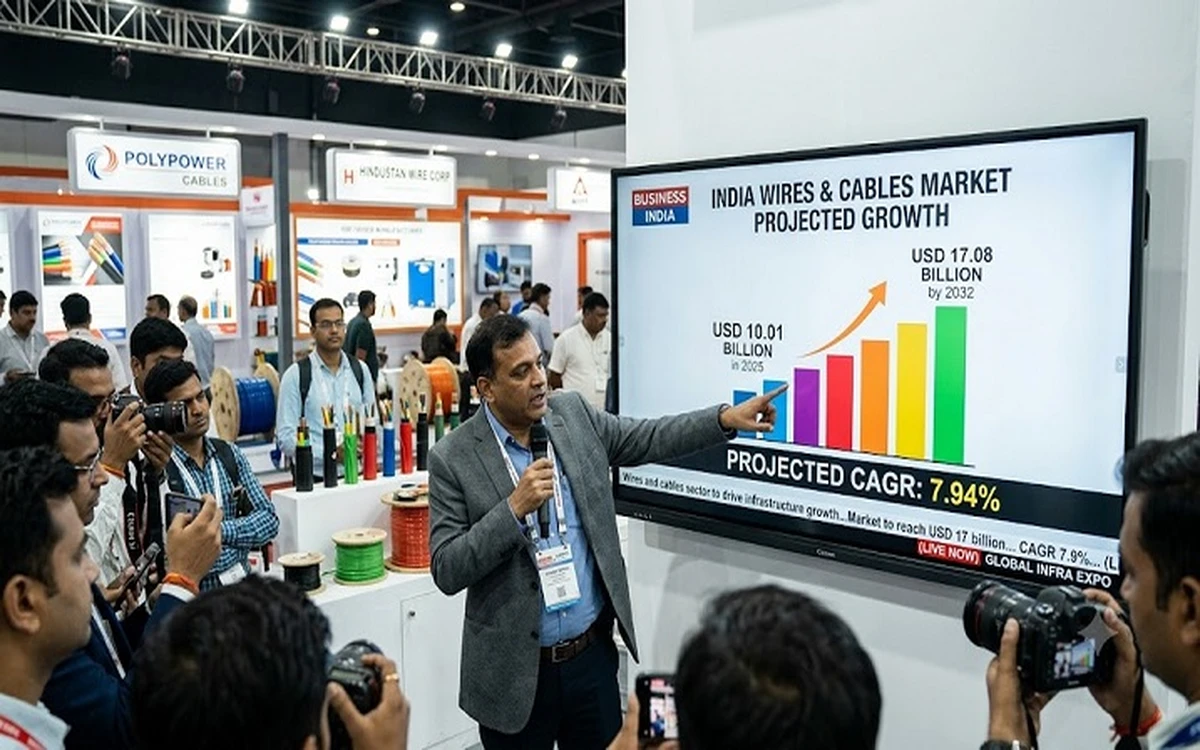
The switchgear, wires and cables industry remained closely linked to real estate completion cycles and infrastructure execution, and influenced strongly by commodity price fluctuations, resulting in moderate but improving demand momentum during the year and high value growth linked to commodity price increase for wires. While project led demand saw some timing variability, the industry benefited from a sustained shift towards organised, branded, and quality certified products, driven by stricter standards and enforcement. The wires and cables segment is expected to grow at 1.5x to 2x of real GDP in the near to mid-term, supported by infrastructure led demand, housing construction and renovation activity, and replacement of ageing electrical networks.
The gradual transition from basic utility switches to design led and smart offerings is strengthening the relevance of organised players with strong branding, distribution reach, and electrician engagement in the Switches and Switchgear segment. Value growth was supported by premiumisation, improved mix, and increasing preference for modular, aesthetic and integrated electrical solutions.
While near term demand may be influenced by commodity price movements and construction seasonality, the medium term outlook for the industry remains structurally constructive, supported by sustained housing demand, infrastructure investment, and increasing emphasis on safety, quality, and design in electrical installations.
2 days ago
Total Views : 41
5 days ago
Total Views : 32

5 days ago
Total Views : 28
2 weeks ago
Total Views : 114
2 weeks ago
Total Views : 139
2 weeks ago
Total Views : 86
3 weeks ago
Total Views : 71
3 weeks ago
Total Views : 67

3 weeks ago
Total Views : 60
last month
Total Views : 67