Loading... Today

-- 0

-- 0

GE Vernova Targets Grid Expansion, Gas Power and Nuclear as Electricity Demand Surges
The Electrical Post
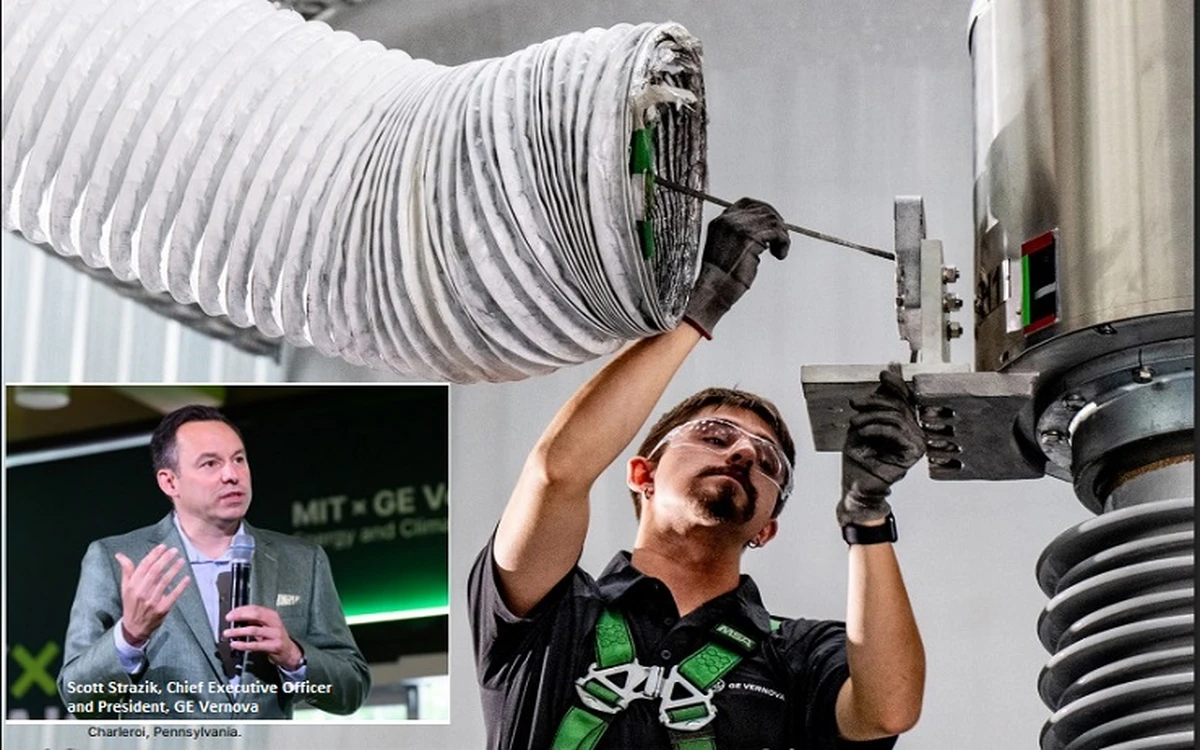
The global electricity sector is entering a multi-decade transformation, driven by rising power demand, artificial intelligence (AI) data centres, advanced manufacturing, industrialisation and the electrification of buildings and transport, according to Scott Strazik, President and Chief Executive Officer of GE Vernova. The company sees this transition as a major investment opportunity, requiring countries to expand electricity generation and accelerate the modernisation of grid infrastructure to support economic growth, national security and industrial competitiveness.
In his message in GE Vernova’s FY2025 annual report, Strazik said reliable, affordable and sustainable electricity is becoming increasingly important for nations seeking higher living standards and more competitive industries. Electricity currently accounts for approximately 20% of global energy consumption, and its share of the energy mix is projected by many to increase by 50% by 2050. Meeting this expanding demand will require substantial investments in power generation, transmission, distribution and associated technologies.
Strazik described the emerging investment cycle as comparable to other major long-term economic transformations, including globalisation and the advent of the internet. He emphasised that the need to modernise electricity infrastructure extends across both developed and emerging economies, with demand drivers varying by region but the underlying requirement for reliable power remaining universal.
GE Vernova is positioned to participate in this transformation through its established presence across power generation and electrification. According to Strazik, the company’s equipment supports approximately 25% of global electricity generation, rising to nearly one-third when China is excluded, and accounts for almost 50% of electricity generation in the United States.
The company reported strong customer demand across international markets in 2025. In Saudi Arabia, where the energy system is transitioning away from heavy fuel oil, GE Vernova secured more than $14 billion in commitments during the year. In Taiwan, the company is supporting infrastructure development associated with semiconductor manufacturing. It also signed new gas equipment contracts in Mexico for the first time in several years, building on its established installed base in the country.
GE Vernova secured major heavy-duty gas turbine orders in Malaysia, Poland, Mexico and Kuwait, while grid equipment orders grew rapidly in Saudi Arabia, Iraq, Algeria and Germany. Its wind equipment business also recorded orders in Australia, India and Romania, reflecting demand across multiple technologies and markets.
Gas power remains an important part of the company's growth outlook. Strazik highlighted its ability to provide a combination of speed, cost-effectiveness, performance and scale as electricity systems accommodate growing renewable energy capacity and rising demand from energy-intensive industries.
Australia illustrates this requirement, with gas-fired generation helping balance the grid as renewable energy penetration increases. Gas power is also expected to play a significant role in supplying baseload and flexible electricity to data centres, whose expansion is creating substantial demand for generation equipment and electrical infrastructure.
Strazik noted that chips and power generation and electrical equipment represent two of the largest cost components on a per-gigawatt basis for data centres, with both carrying premium costs compared with other building expenses. As operators seek to secure electricity at unprecedented speed and scale, the data-centre buildout is expected to become a significant driver of gas turbine demand.
GE Vernova intends to provide immediate power solutions while developing opportunities in more efficient heavy-duty gas turbines, small modular reactors and carbon capture technologies over the coming decade. The company is also expanding relationships with hyperscalers and other electricity-intensive industries. In the fourth quarter of 2025, its Electrification segment recorded its largest quarter of direct orders from hyperscalers, while grid equipment growth emerged as a key component of its expansion strategy.
Nuclear energy is another area gaining momentum, with activity extending across North America and European markets, including Poland, Sweden and Finland. At the Darlington site in Ontario, Canada, GE Vernova made progress on the deployment of its first small modular reactor, with construction beginning in the spring and hundreds of workers on site daily. In late 2025, the company also announced a memorandum of understanding involving the US and Japanese governments to develop small modular reactors with a potential value of up to $100 billion.
The company’s financial performance in 2025 provides a foundation for these expansion plans. Its backlog increased by more than 25% to $150 billion, representing an addition of $31 billion during the year and providing greater visibility into future revenue and earnings. Equipment margins within the backlog also increased significantly, building on the improvement recorded in 2024.
GE Vernova reported orders of $59 billion, revenue of $38 billion, adjusted EBITDA of $3.2 billion and free cash flow of $3.7 billion in 2025. Its financial strategy continues to focus on disciplined revenue growth, sound risk management and the expansion of services.
The company also pursued targeted acquisitions and portfolio simplification to strengthen its core businesses. Since its spin-off, completed or announced disposals have generated approximately $2.5 billion, allowing GE Vernova to redirect capital towards growth opportunities. These included the acquisition of Woodward’s combustion parts business to support the expansion of its Gas Power supply chain and the announced $5.3 billion acquisition of the remaining 50% stake in its Prolec GE joint venture with Xignux.
According to Strazik, these acquisitions are expected to support growth and margin expansion in some of the company's fastest-growing businesses. GE Vernova returned $3.6 billion to shareholders through dividends and share repurchases in 2025. In December, it doubled its annual dividend to $2 per share and increased its share repurchase authorisation from $6 billion to $10 billion.
Services and electrification are expected to contribute significantly to future performance. GE Vernova has an installed base of more than 7,000 gas turbines and 59,000 wind turbines worldwide. Combined with its $86 billion services backlog, this installed base provides opportunities to expand recurring service revenue in the coming years.
Its Electrification equipment backlog has more than quadrupled over four years to $35 billion, and the company expects it to double again by 2028. This business offers growth opportunities across the electricity value chain, regardless of the source of power generation, while the company is also exploring adjacent markets, including supplying equipment directly within data centres.
To meet rising demand, GE Vernova plans to invest $11 billion in capital expenditure and research and development between 2025 and 2028, including $1 billion for Prolec GE from 2026 to 2028. The investment programme covers manufacturing expansion, automation, advanced technologies and the development of new products.
At its Greenville facility, the company installed more than 200 new machines in 2025 and plans to invest in another 200 in 2026. Across its grid factories in Pennsylvania, it plans to invest more than $100 million over the next two years and create 700 jobs to increase production of high-voltage switchgear, which is essential for stable and reliable electricity networks.
Additional investments include $20 million in Singapore to develop next-generation repair capabilities for heavy-duty gas turbines at its Global Repair Service Center. In Hungary, the company is expanding plant capacity while upgrading technology and improving energy efficiency.
GE Vernova is also applying artificial intelligence, robotics, lean manufacturing and advanced automation to increase productivity and maximise output from its existing factories. Its Advanced Research Center is working to scale AI and robotics applications across the company while developing technologies such as carbon capture, fuel cells and solid-state transformers for data centres. Research and development priorities also include small modular reactors and grid software platforms, which the company expects to generate returns over the next decade.
Strazik said the company would continue evaluating factory investments based on their ability to improve productivity, eliminate waste and maximise manufacturing capacity. He stressed that the development of new technology businesses reflects a substantial commercial ambition rather than experimental activity alone.
Looking ahead, Strazik believes the electricity sector remains in the early stages of a transformation with significant global economic and societal implications. While GE Vernova delivered strong results in 2025 and created value for customers, shareholders and employees, he views these achievements as the beginning of a much longer growth journey.
The company enters 2026 with optimism, supported by strong customer demand, a growing backlog, planned capital investments and opportunities across gas power, nuclear energy, wind and electrification. As countries seek to secure reliable electricity supplies and modernise ageing infrastructure, GE Vernova expects the expansion of power generation and grid equipment to remain central to its long-term growth strategy.
16 hours ago
Total Views : 15

2 days ago
Total Views : 46
2 days ago
Total Views : 51
2 days ago
Total Views : 39
5 days ago
Total Views : 30

5 days ago
Total Views : 34
5 days ago
Total Views : 48

last week
Total Views : 187
last week
Total Views : 34
last week
Total Views : 69